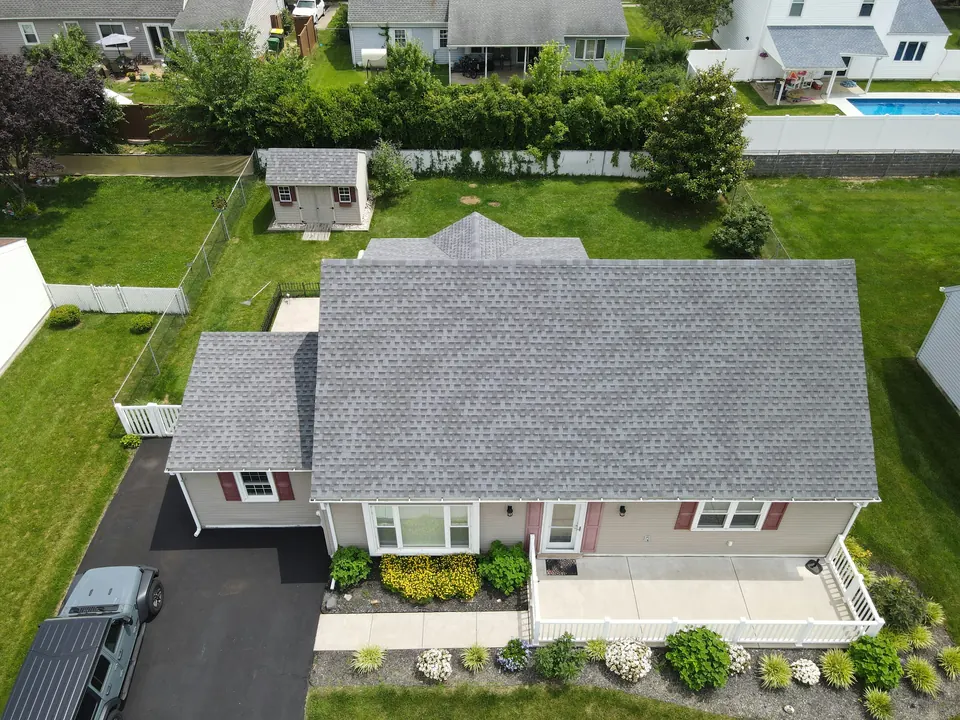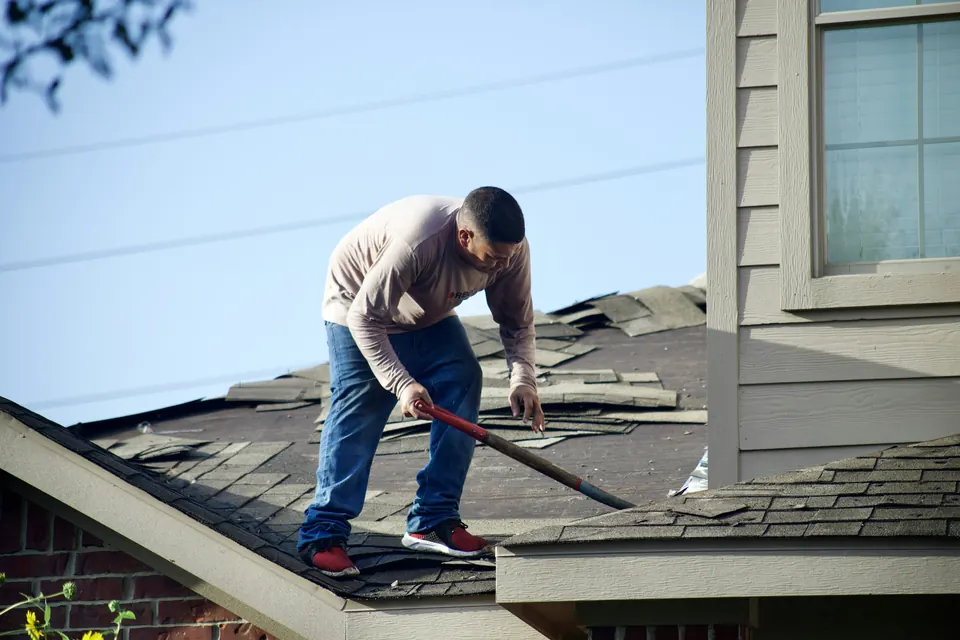
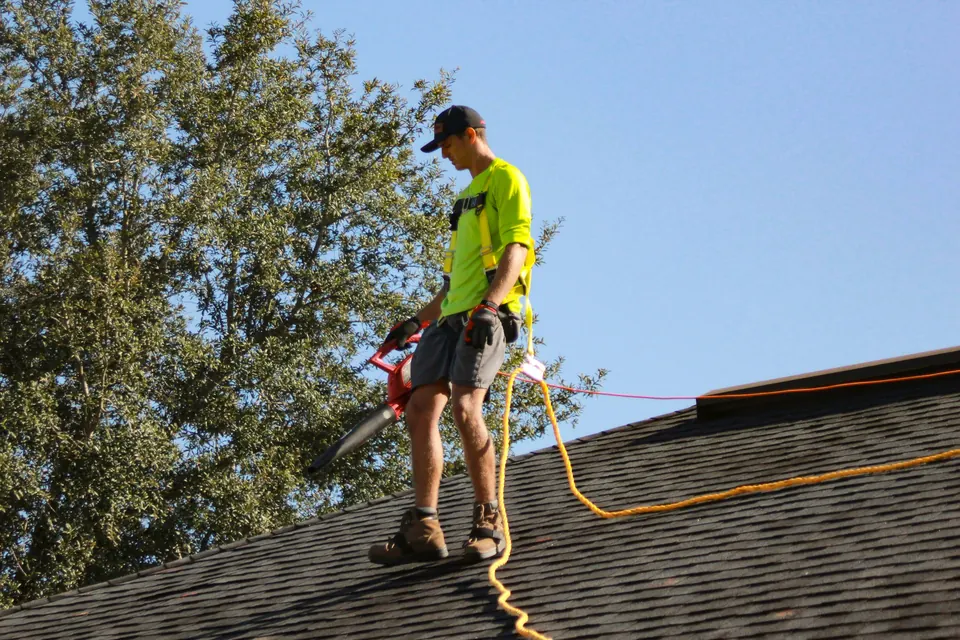
Ice dams need three things at once, according to Home Team Construction: snow on the roof, temperatures below freezing, and a roof that is warmer in some spots than others. Long Island gets plenty of the third. Rich’s Construction notes that a lot of postwar Suffolk homes are under-insulated, and Upper Restoration points out how often Long Island winters sit right around 32°F with high humidity.
How to tell you have one
- thick ice along the roof edge and in the gutters
- icicles forming behind the gutter or on the siding, not just hanging off the gutter
- brown or dirty icicles
- water stains on ceilings or walls near the roofline
- peeling or bubbling paint near upstairs windows
- gutters sagging under the weight
What removal costs
| Item | Published price | Source |
|---|---|---|
| Professional removal, most homes | $650 to $2,400 | Rich’s Construction, Sep 2026 |
| Steam removal, hourly | $400 to $600 an hour | Rich’s Construction, Sep 2026 |
| Typical roof | two to three hours | Rich’s Construction, Sep 2026 |
| Steam removal, hourly | about $400 to $700 an hour | Home Team Construction, Jun 2026 |
| Heat cable installation | $500 to $1,500 | Rich’s Construction, Sep 2026 |
Removing it safely
Low-pressure steam melts the ice without touching the shingles. Upper Restoration calls it the gold standard, and it is what Long Island removal companies use.
What not to do:
- Do not chip or hammer. Home Team Construction and Upper Restoration both warn it damages shingles and is dangerous on a frozen roof.
- Do not pressure wash. Home Team Construction says it can shred shingles.
- Be careful with salt. Rich’s Construction advises against rock salt and chemical melts. Upper Restoration calls calcium chloride socks a temporary fix and warns the runoff can corrode aluminum gutters and kill plants below.
What you can do from the ground: rake the snow off the lower few feet of the roof with a roof rake after a storm, before a dam forms. Home Team Construction suggests raking once snow reaches 6 inches or more.
Stopping them from coming back
Removal only treats the symptom. The fix is keeping the roof deck cold and even:
- Air sealing. Upper Restoration lists the usual heat leaks into the attic: recessed lights, plumbing stacks, pull-down stairs, attic hatches and gaps around the chimney.
- Insulation. More attic insulation keeps house heat off the roof deck.
- Ventilation. Balanced soffit and ridge vents, with baffles so the insulation does not block the soffits. Leak Stoppers also flags bath fans and attic HVAC units venting into the attic.
- Ice and water shield. A self-adhering membrane under the shingles at the eaves. The Residential Code of New York State, section R905.1.2, calls for it to run at least 24 inches inside the exterior wall line where the local jurisdiction requires an ice barrier.
- Clean gutters going into winter. Clogged gutters hold water that freezes at the roof edge.
Heat cables can help on problem spots, but Home Team Construction notes they do not remove a dam that has already formed.
Insurance
Upper Restoration says standard homeowner policies typically cover the water damage an ice dam causes inside the house, but not the cost of removing the ice. Check your own policy.